On the second of March the flags go up along the older streets, the schools do something about it in the morning, and most of the town goes to work. Independence Day in Texas is a working holiday. That fits the day it remembers. The men who signed the declaration at Washington-on-the-Brazos in 1836 did it in an unfinished building with cloth tacked over the window openings, in a cold wind, with the Alamo already under siege a few days' ride to the west. Nobody took the day off. They wrote it, signed it, and went back to the war. Seven weeks later the war was decided in a field just across the channel from here, in about the time it takes to eat lunch.
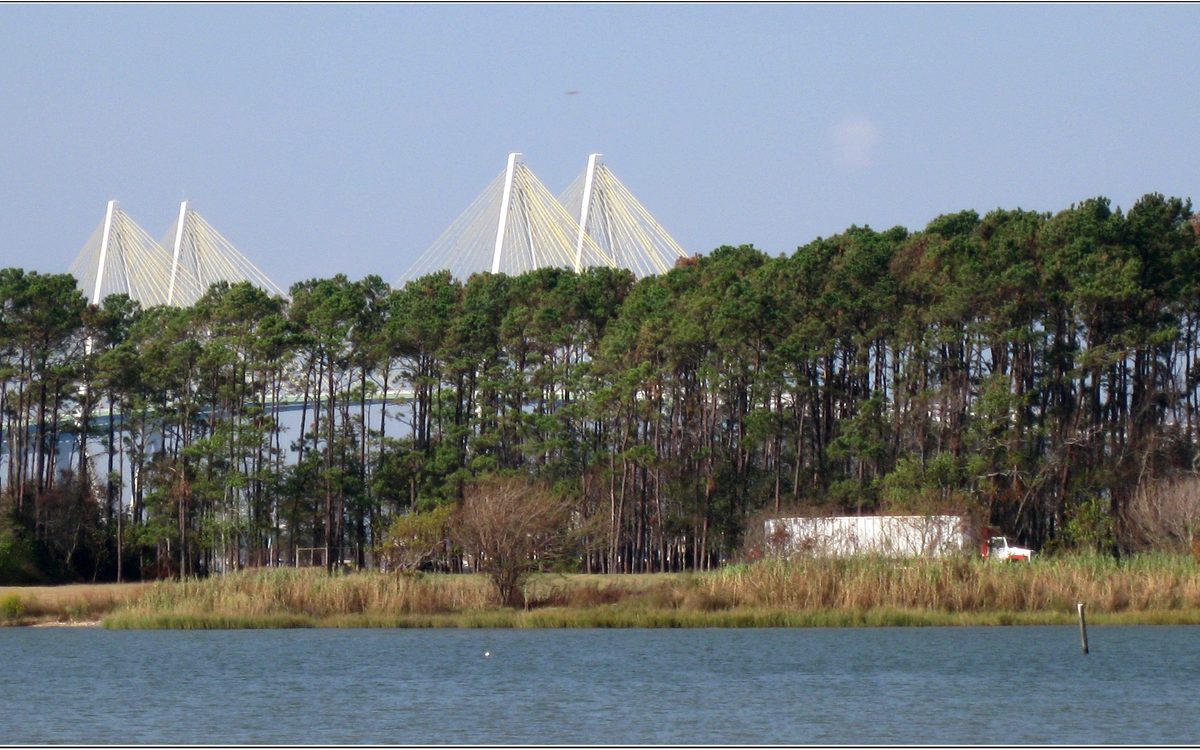
What they declared independent was not a place that looks like this one. It helps to stand on the pier at Bayland Park at dusk and try to see it. Take away the tankers riding at anchor. Take away the towers on the far shore and the orange they throw onto the underside of the clouds. Take away the bridge and its cables. Take away, if you can manage it, every barrel of oil that has ever come out of the ground in this county, because in 1836 not one had. What is left is the bay. Brown water, a low green shore, a line of pelicans, and the wind. That was Texas. That was most of what there was.
The republic that lasted nine years, and the state that followed it, ran on three things: cattle, cotton, and water you could float a ship on. None of them is a fuel in the way we use the word. All of them are energy.
Start with the cattle, because they were here first and they were nobody's idea. The longhorn was a Spanish animal gone wild, a few centuries of feral breeding in the brush country south and west of here. It could walk a long way on bad grass and it did not need anybody. When the Civil War ended there were something like five million of them loose on the range and no market nearer than the railheads in Kansas, so the market was walked to. A drive was a machine for moving sunlight north. Grass took the sun, cattle took the grass, and the herd carried it up the trail at the pace of a walking cow, and somebody in Chicago ate it. That is a supply chain. It moved at three miles an hour, and it could only move in the months when there was grass along the way, because the fuel had to be found on the road.
Cotton was the money. It grew in the river bottoms, the Brazos and the Colorado and the Trinity, on land cleared by hand and, before 1865, worked by people who had no say in the matter. The bales came down to the coast in wagons and later on rails, and they went out through Galveston, which for a good stretch of the nineteenth century was the biggest city in Texas and its front door. A bale of cotton on a Galveston wharf was bound for a mill in England or New England, and the ship that took it there was pushed by wind, and later by coal. Texas cotton was spun by somebody else's energy. The state grew the fiber. The power to turn it into cloth lived in another country.
And the bay. Galveston Bay was the reason the coast was worth anything. It was shallow and full of oyster reef, and the deep channel up to Houston did not exist yet, but it was water you could put a schooner on, and a schooner beat a wagon every time. The little landings along the shore, the ones whose names are still on the road signs, were where the interior met the world. A man named Lynch was running a ferry across the San Jacinto at Lynchburg by 1822, fourteen years before there was a republic to put it in, and it was toward that ferry that both armies were moving in April of 1836 when they found each other instead. The county still runs a boat across the same water, free, a few minutes each way. Before the channel was dredged and opened in 1914, the world came as far as the bay would let it, and the bay decided a lot.
What did not exist, in any form we would recognize, was the thing this town is built on. Nobody had a fuel. They had wood for the steamboat boilers and the kitchen stove. They had tallow for candles and a little whale oil for the lamp if they were prosperous. They had the horse, which is a machine for turning grass into work, and the ox, which is the same machine geared lower. They had their own backs. When a person in the republic wanted something moved, or lifted, or pumped, or cut, the energy for it had to come out of a living body that had eaten something that had grown that year. Nothing was banked. There was only what the grass could give between one spring and the next.
It is hard now to feel how small that account was. James Watt, selling steam engines to men who owned horses, needed a way to say what one of his engines could do, and he settled on the work a good horse could keep up all day: thirty-three thousand foot-pounds every minute, one horsepower. A gallon of gasoline, burned, holds about as much work as that horse can do in four or five long days. The horse has to eat the whole time. The gallon sits in a can. That is the entire distance between the republic and the town, and it is a distance of one gallon.
Hold onto the gallon, because it explains the shape of the old state. Everything was slow because everything ran at the speed of a muscle. Towns were small because a town can only be as big as the food a wagon can bring it. Houses were built of what grew nearby. A trip to Galveston was a trip. Nobody in Texas in 1850 could have told you what a barrel was, in the sense we mean it, because the unit had no reason to exist.
The first petroleum most Texans ever met came in a can. After the Pennsylvania wells began flowing in 1859, kerosene moved down the rivers and along the coast and into the general stores, and it was cleaner than tallow and cheaper than whale oil, and a family that had gone to bed at dark could read past it. That was the whole of the oil business here for forty years: a lamp, filled from a can, shipped from somewhere else. Nobody thought to look under their own feet.
Then the ground opened.
The first big one was not here. It was near Beaumont, at a low rise called Spindletop, in January of 1901. The drillers had been laughed at for years for thinking there was oil under a salt dome. When they got down a little over a thousand feet the well blew the pipe out of the hole and threw a column of oil higher than the derrick, and it ran that way for nine days before anybody could cap it. The estimates of what came out of that one hole vary, but the number people usually give is on the order of a hundred thousand barrels a day. Do the arithmetic against Watt's horse and it comes out somewhere absurd: in a single week one hole in the ground let loose more usable energy than every horse and mule in the state could have produced in the same week, many times over. Nothing was the same after that. Not the price of a lamp. Not the map.
Goose Creek came a few years behind. Oil was found around the creek early in the new century, and the field boomed in 1916 and 1917, and then something happened here that had not happened much anywhere: they drilled in the water. The derricks stood out in the creek and in Tabbs Bay on pilings, with the tide moving underneath them. People who study the industry count it as one of the first fields worked offshore, in the crude and literal way of the time. And as the oil came up the ground went down, because it does, and the shoreline you walk on today is lower than the one the drillers stood on.
The refinery followed the field. Humble Oil started building it in 1919 on the flat land along the channel, because the oil was here and the water was here, and it was running by 1920, and it has not stopped since. Everything that came after is a consequence. The town, the schools, the hospital on Garth Road, the bridge, the three high schools, the hotels that fill when the turnaround crews come in: all of it is the long shadow of a hole in the ground.
The republic those fifty-nine men declared did not lack energy. It was full of energy. It was grass and sun and salt water and muscle, and every bit of work done in it was done by something alive. What the gusher changed was not whether Texas had energy but where the energy had been kept. Oil is what is left of a sea that lived and died a few hundred million years ago and was buried before anything could eat it. The longhorn was spending that year's grass, and could spend it no faster than a stomach allows. The well was spending a harvest gathered before there was a bay here, or a shore, or anything on it that could walk, and it could spend it as fast as a pipe would carry it. I do not know a better way to say the difference between the state before and the state after than that a person can now drive to Galveston and back before lunch.
It is also why the day is a working holiday. The men at Washington-on-the-Brazos signed for a country that had to be worked to exist, and that has not changed. The plant on the channel is a place where a great many people go every morning and every night to keep a fire burning that would go out without them. The republic asked the same thing. It just asked it of a mule.
At dusk on the second of March somebody on the older streets takes the flag back in off the porch, and the shift-change traffic comes out through the gate with its headlights on, and the tide moves in Tabbs Bay over the ground where the derricks stood. The water does not know what year it is. It was here before the oil and before the flag, and of the three things the old state ran on it is the one still doing its job.